Pressure-treated lumber is widely used in outdoor construction because the treatment helps protect wood from fungal decay and wood-destroying insects. You will commonly see it specified for decks, fences, exterior framing, posts, landscaping structures and other lumber and building materials applications where untreated lumber may be exposed to conditions that increase the risk of deterioration.
But not all pressure-treated wood is intended for the same environment. A board marked for an above-ground application is not automatically interchangeable with lumber rated for ground contact. Understanding that distinction is one of the most important parts of choosing treated lumber for a project.
What Is Pressure-Treated Lumber?
Pressure-treated lumber is wood that has been treated with preservative chemicals under controlled pressure.
Wood is a natural material, and prolonged exposure to moisture can create conditions favorable to fungal decay. Some insects can also damage susceptible wood. Preservative treatment is intended to reduce those risks and extend the range of environments in which wood can be used.
The word treated does not mean the material is completely waterproof or unaffected by weather. It refers primarily to protection against biological deterioration such as decay fungi and wood-destroying insects.
How Is Pressure-Treated Lumber Made?
Commercial pressure treatment generally takes place inside a sealed cylinder.
A typical process involves removing air from the wood with a vacuum, introducing a preservative solution, and then applying pressure so the preservative penetrates the wood more deeply than it would with a simple surface coating. Excess preservative is removed afterward.
The exact treatment process and preservative system can vary depending on the wood, intended application and applicable standards.
For a buyer, the important point is not memorizing the chemistry. It is making sure the treated product is appropriate for the environment in which it will be used.
Common Uses for Pressure-Treated Lumber
Pressure-treated wood is most useful where lumber may experience outdoor exposure, repeated moisture or conditions that create a higher risk of decay or insect damage.
Common applications include:
- decks and deck framing;
- fences and fence posts;
- exterior stairs and walkways;
- outdoor structural framing;
- landscaping structures;
- posts and other members near or in contact with soil.
The correct treatment category depends on the actual exposure. Lumber used well above the ground with good drainage may face a very different environment from a post embedded in soil.
Pressure-Treated Lumber for Decks
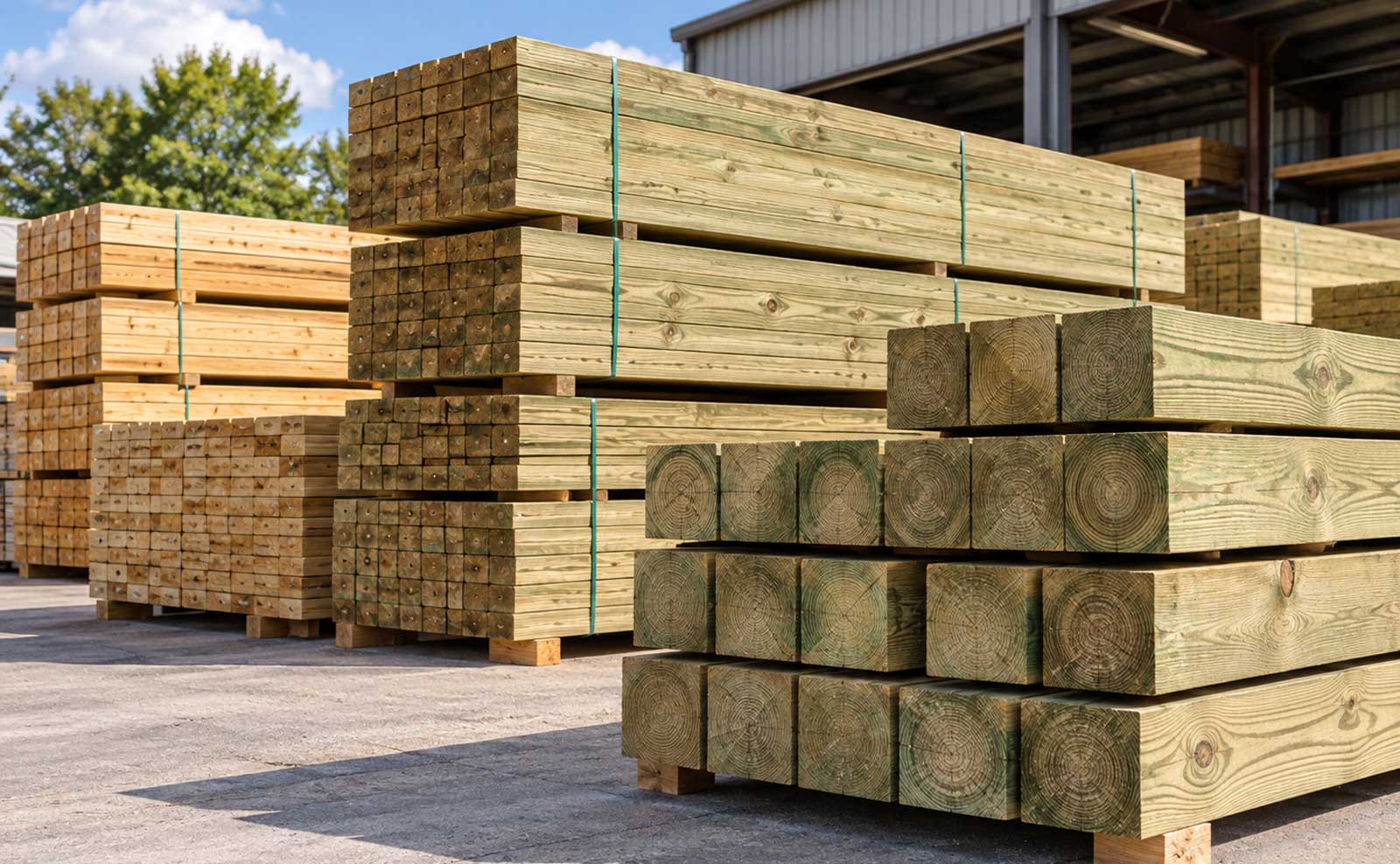
Deck construction is one of the most common reasons people search for pressure-treated lumber.
A deck contains several different types of components, however, and they do not necessarily experience the same exposure.
Decking and Rail Components
Deck boards, rails and other exposed components may sometimes qualify for above-ground treated lumber when their location, drainage and project specifications allow it.
They still need to be suitable for exterior exposure, and the treatment marking should match the intended use.
Deck Framing
Posts, beams, joists and other framing components can face more demanding conditions.
Some may be close to soil, difficult to replace after construction or exposed to moisture that does not dry quickly. For these situations, ground contact pressure treated lumber may be specified even when a framing member is not literally buried in soil.
Retail and industry guidance commonly recommends ground-contact treatment where wood touches or is close to soil, where moisture exposure is frequent, or where the member is difficult to repair or replace.
The plans, building requirements and treatment label should determine which product is appropriate for each part of the deck.
Above-Ground vs. Ground-Contact Pressure-Treated Lumber
These terms describe different exposure conditions rather than simply two quality levels.
Above-ground treated lumber is intended for qualifying applications where the material remains sufficiently separated from soil and has appropriate ventilation and drainage.
Ground-contact treated lumber is treated for more severe exposure. The American Wood Protection Association states that ground-contact applications require AWPA Use Category UC4A or higher.
Ground-contact material may also be appropriate when a structural member experiences persistent moisture or would be especially difficult to replace.
Do not decide solely from appearance. Check the product identification or end tag and match its intended use to the project requirements.
Benefits of Pressure-Treated Wood
Protection Against Decay and Insects
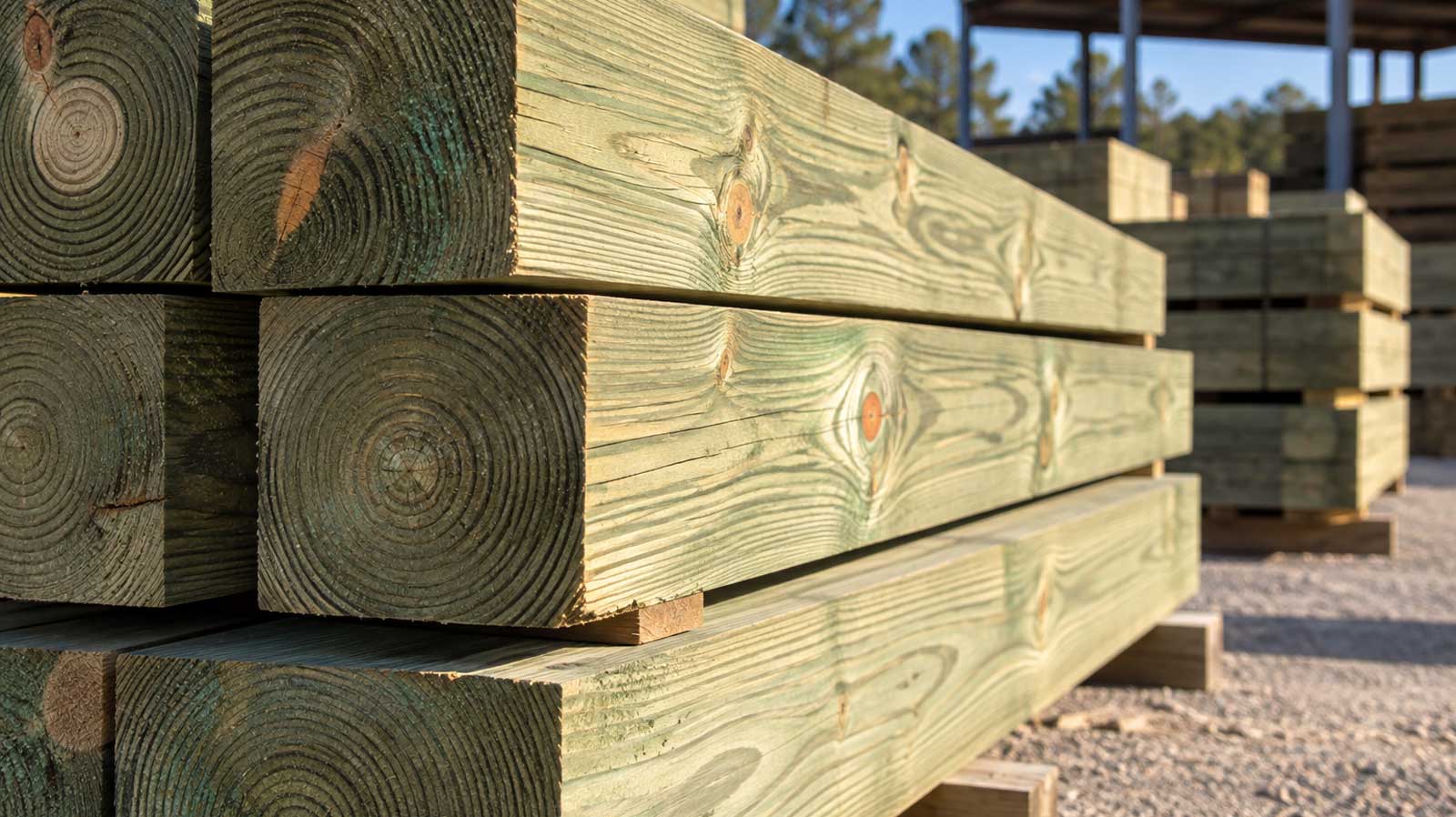
The main reason for treating lumber is to help protect susceptible wood from fungal decay and wood-destroying insects in environments where untreated material may deteriorate.
Useful for Outdoor Construction
Pressure-treated lumber allows wood to be used in many exterior applications such as decks, fencing, landscape structures and outdoor framing.
Familiar Wood Workability
It remains a wood building material, so builders can generally cut, drill and fasten it using common woodworking and construction methods, subject to the requirements for the particular treated product.
Multiple Treatment Levels for Different Conditions
The treatment system allows lumber to be selected according to expected exposure instead of treating every application as identical.
Limitations and Considerations
Pressure treatment does not eliminate every characteristic of natural wood.
Wood still responds to moisture. As its moisture content changes, it can shrink, swell, check, twist or warp. Proper storage, installation and moisture management therefore remain important even when lumber has been pressure treated.
Cutting or drilling treated lumber can also expose wood that did not receive the same preservative penetration as the original surface. AWPA guidance includes field treatment requirements for cuts and holes in appropriate preservative-treated applications.
Fasteners and connectors must also be appropriate for the treated lumber being used. Follow the applicable building requirements and product recommendations rather than assuming that every fastener is suitable.
How to Choose the Right Pressure-Treated Lumber
Start with how and where the lumber will be used.
Ask:
- Will the lumber touch soil?
- Will it be close to the ground?
- Will it regularly stay damp or have limited airflow?
- Is it a structural component that would be difficult to replace?
- Does the project plan or code specify a particular treatment category?
- What does the product end tag state about its intended use?
For a pressure-treated lumber deck, for example, the correct answer may differ between the visible deck boards and the structural framing below them.
If the project requires a specific size, treatment category or quantity, those details should be included when requesting material.
Frequently Asked Questions
Is pressure-treated lumber waterproof?
No. Pressure treatment is primarily intended to protect wood against biological deterioration such as decay fungi and insects. Wood can still absorb and release moisture and undergo dimensional changes.
Can pressure-treated lumber be used for a deck?
Yes. Pressure-treated wood is commonly used for decks, including both visible components and structural framing. The required treatment level depends on the location and exposure of each member.
What is ground contact pressure treated lumber?
It is treated lumber intended for more severe exposure conditions, including qualifying applications where wood contacts soil or fresh water. AWPA identifies UC4A and higher categories for ground-contact applications.
Can above-ground treated lumber be used for deck framing?
Sometimes, depending on the exact location, drainage, exposure, specifications and code requirements. Framing that is close to soil, frequently wet or difficult to replace may require ground-contact-rated material.
Can pressure-treated wood be painted or stained?
Many treated wood products can be finished, but the lumber must be in a suitable condition for the coating being used. Follow the coating and lumber manufacturers’ instructions, particularly regarding moisture.
What happens when pressure-treated lumber is cut?
Cutting can expose portions of wood with less preservative protection. Appropriate field treatment of cuts and holes may therefore be required depending on the product and application.
Need Pressure-Treated Lumber in the San Francisco Bay Area?
North Bay Lumber supplies pressure-treated lumber and building materials for projects throughout the San Francisco Bay Area, with delivery available in the region. If you know the material, dimensions and quantities required, include them with your inquiry. If treatment requirements are specified on your plans, include those details as well. Request a Quote for pressure-treated lumber.
Request a Quote
 Get a free quote