LVL lumber, or laminated veneer lumber, is an engineered wood product used for structural framing when a project requires predictable strength, stiffness, and dimensional consistency.
It is commonly found in beams, headers, and floor or roof framing systems, particularly where loads must be carried across openings or transferred through a building structure.
North Bay Lumber supplies lumber and building materials for construction projects in the San Francisco Bay Area, including engineered lumber for structural applications.
Unlike a conventional board sawn directly from a log, LVL is manufactured from multiple layers of wood veneer bonded together into a structural member.
What Is LVL Lumber?
LVL stands for laminated veneer lumber.
It belongs to a family of engineered products known as structural composite lumber, or SCL. Other SCL products include PSL, LSL, and OSL, but they are manufactured differently and have different properties.
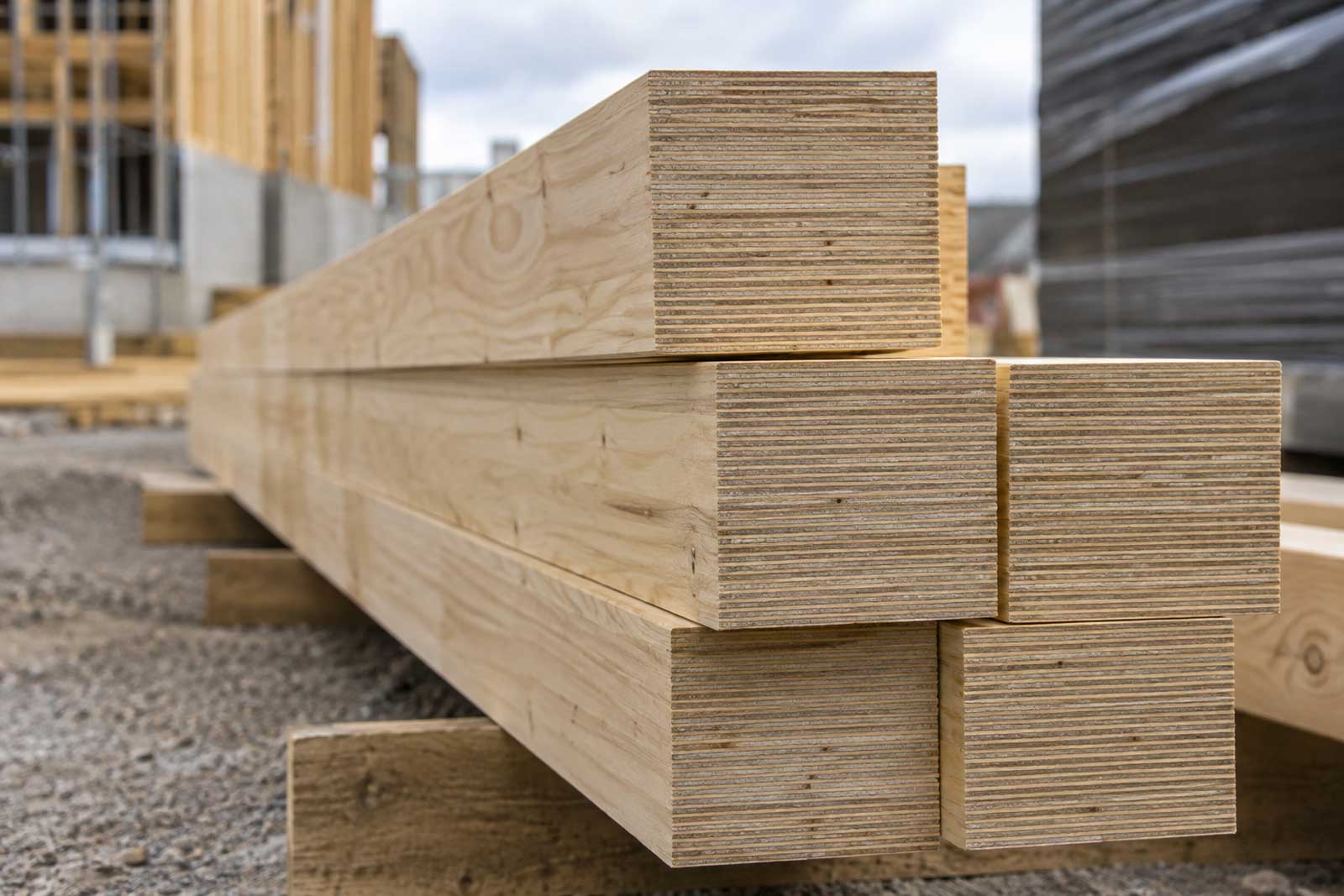
In LVL, thin wood veneers are layered so that the grain runs primarily parallel to the length of the member. The layers are bonded with structural adhesive and pressed into a larger billet, which can then be cut into structural sections.
This manufacturing process allows natural variations found in individual pieces of solid-sawn lumber to be distributed throughout the product.
What Is Laminated Veneer Lumber?
“Laminated veneer lumber” and “LVL” refer to the same type of engineered wood product.
The word laminated describes the process of bonding multiple layers together. Veneer refers to the thin wood layers used to make the member.
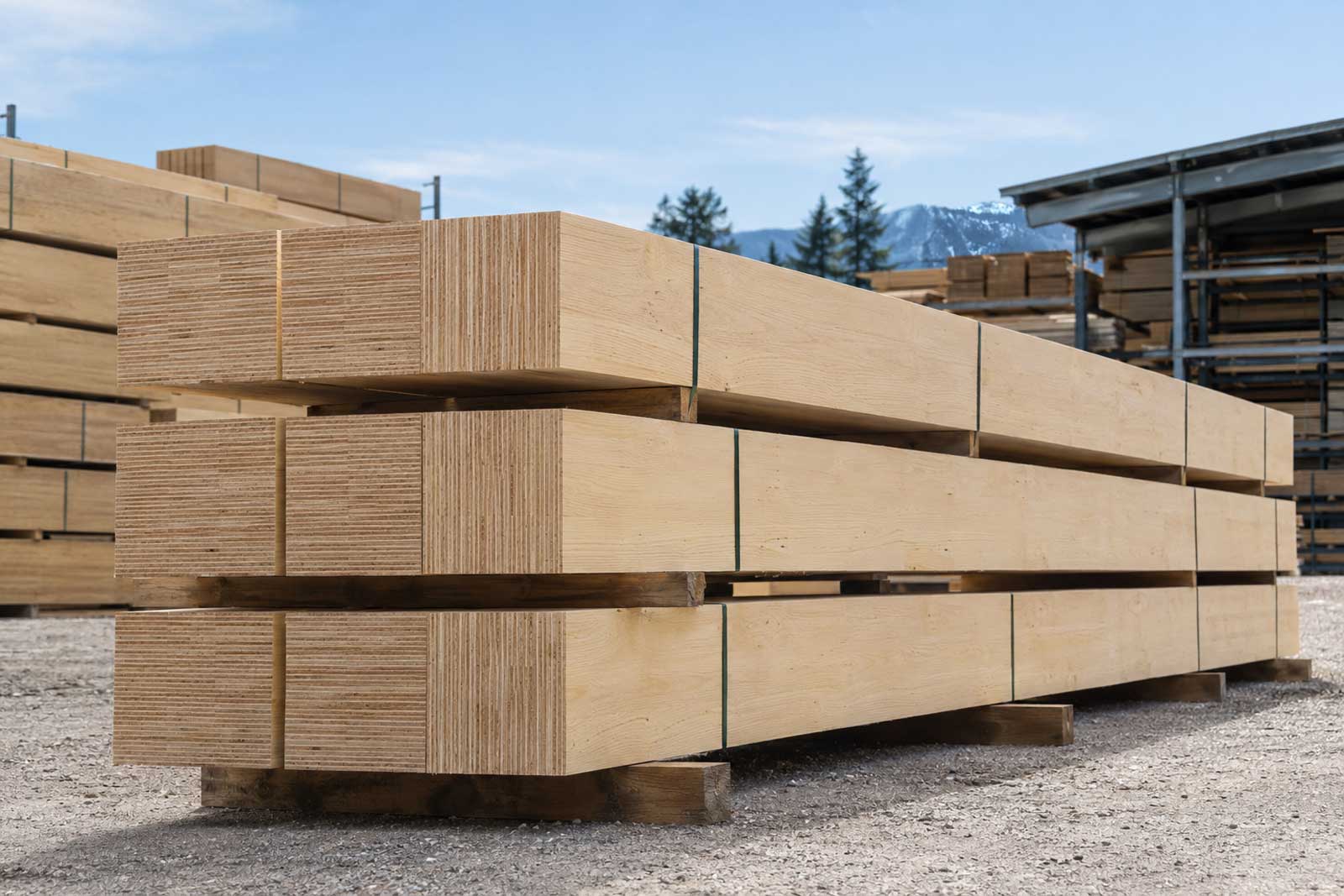
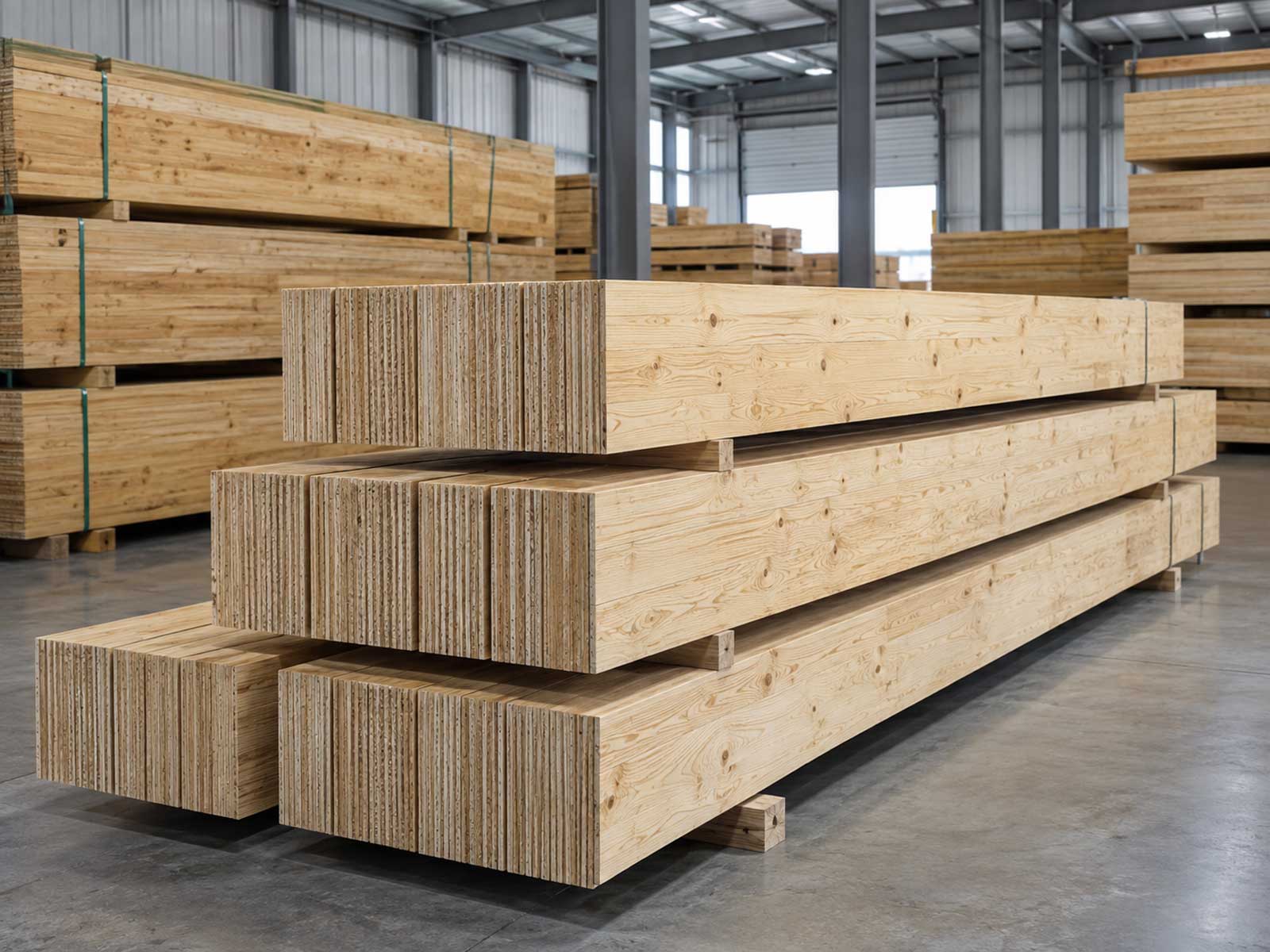
The resulting product looks different from ordinary dimensional lumber when viewed from the side because the individual veneer layers are visible.
Although the phrase LVL wood is commonly used informally, LVL is more accurately described as an engineered structural wood product rather than simply another grade of conventional lumber.
How Is LVL Lumber Manufactured?
LVL production starts with thin wood veneers.
Those veneers are dried and graded, coated with structural adhesive, and assembled with their grain oriented mainly in the same longitudinal direction. Heat and pressure are then used to cure the assembly into a solid billet. The billet is cut into structural members for specific applications.
Because the material is engineered rather than dependent on one solid piece of timber, manufacturers can produce structural members with relatively consistent properties.
Specific design values, dimensions, and permitted applications still vary by manufacturer and product.
Why Is LVL Used in Construction?
The main reason builders and designers use LVL is structural performance.
Natural lumber contains knots and other variations that affect one board differently from another. Engineered structural lumber redistributes much of that variability across many layers.
LVL is therefore frequently used where framing must carry significant loads or span openings that would be difficult to address efficiently with conventional framing lumber.
Common LVL Construction Applications
LVL Beams
Beams are one of the most familiar LVL applications.
An LVL beam can be used to transfer loads across an open area and into supporting walls, posts, or other structural members.
Applications can include floor beams, roof beams, and girders. Exact beam sizing must be based on structural requirements rather than selected by appearance or nominal size alone.
LVL Headers
Headers carry loads over openings such as doors and windows.
LVL headers are frequently used where an opening is wide or where significant floor, wall, or roof loads must be transferred to the framing on each side.
Floor Joists and Floor Systems
Searches for LVL floor joists can be slightly misleading because LVL may play several roles in a floor system.
LVL can be used as a joist in suitable engineered applications, but it is also commonly used as the beam or girder supporting conventional joists or engineered I-joists.
The project drawings should determine the role of LVL within the floor system.
Roof Framing
LVL can also be used in roof systems, including ridge beams, roof beams, and certain rafter applications.
These are engineered structural applications and must be selected according to required loads and product specifications.
LVL vs. Conventional Lumber
Both LVL and conventional dimensional lumber are useful structural materials, but they are produced differently.
Conventional lumber is sawn from individual pieces of timber. Its structural grade accounts for natural characteristics such as knots and grain.
LVL laminated veneer lumber is manufactured from many graded veneer layers bonded into an engineered member.
That manufacturing process can provide:
- more consistent structural properties;
- high strength and stiffness;
- good dimensional consistency;
- structural members suited to demanding beam and header applications.
This does not mean LVL is automatically the better choice for every piece of framing.
Conventional lumber may be entirely appropriate for many standard framing applications. LVL becomes particularly useful where structural requirements, span, load, or geometry call for an engineered solution.
For exterior framing or applications involving persistent moisture exposure, the material requirements may be very different. Our guide to pressure-treated lumber explains the difference between above-ground and ground-contact treated wood.
Advantages of LVL Lumber
Consistent Structural Performance
Because LVL is manufactured under controlled conditions from graded veneer, its structural characteristics are more predictable than those of an individual piece of naturally variable lumber.
High Strength and Stiffness
LVL is designed for structural applications and is frequently used where beams or headers must carry substantial loads.
Dimensional Consistency
The engineered manufacturing process reduces some of the variability associated with solid-sawn lumber and produces members with consistent dimensions.
Useful for Large Openings
LVL is commonly specified for headers and beams over garage doors, windows, and other openings where ordinary framing arrangements may not provide the required capacity.
Limitations and Design Considerations
LVL is an engineered structural component, not a generic substitute that can be swapped one-for-one with any piece of dimensional lumber.
Design values vary between products, so beam size, number of plies, bearing, fastening, and allowable modifications should come from project documents, engineering requirements, and applicable product literature.
Moisture exposure also matters.
Structural composite lumber is commonly used under dry-service conditions unless a specific product has been designed and approved for another environment. A standard untreated LVL product should therefore not automatically be assumed suitable for direct long-term exposure to rain or wet-service conditions.
Engineered lumber may also cost more than conventional lumber, so it is normally selected where its structural or dimensional advantages justify its use.
If your plans already specify the member dimensions and quantities you need, you can Request a Quote directly from North Bay Lumber.
You can also explore additional building material guides on the North Bay Lumber Blog.
Frequently Asked Questions
What does LVL stand for in construction?
LVL stands for laminated veneer lumber, an engineered structural wood product made from bonded layers of thin wood veneer.
What is LVL lumber used for?
Common uses include beams, headers, girders, roof framing, floor systems, joists, and other structural framing applications.
Is LVL stronger than regular lumber?
LVL is manufactured to provide high and predictable structural performance. Whether a specific LVL member can replace a specific piece of dimensional lumber depends on the loads, span, member configuration, and design values of the product.
Can LVL Lumber be used for floor joists?
Yes, LVL can be used in certain joist applications. It is also commonly used as a beam or girder supporting floor joists or I-joists. Structural plans should specify the intended configuration.
Is LVL the same as plywood?
No. Both are made from wood veneers, but they are engineered differently and intended for different purposes. LVL is a structural composite lumber member, while plywood is a structural panel product with veneers typically arranged in alternating grain directions.
Can LVL Lumber be used outside?
Do not assume that standard untreated LVL is suitable for exposed exterior or wet-service conditions. Exposure limitations depend on the specific engineered product. Check the product documentation and project specifications.
Can LVL be cut or notched on site?
Field modifications to a structural LVL member can affect its capacity. Follow project documents and manufacturer requirements before drilling, notching, or otherwise modifying the member.
Looking for LVL Lumber in the San Francisco Bay Area?
North Bay Lumber supplies LVL lumber and other lumber and building materials for projects in the San Francisco Bay Area, with delivery available throughout the region. For the most accurate material quote, provide the LVL dimensions, quantities, and structural specifications shown on your plans.
Request a Quote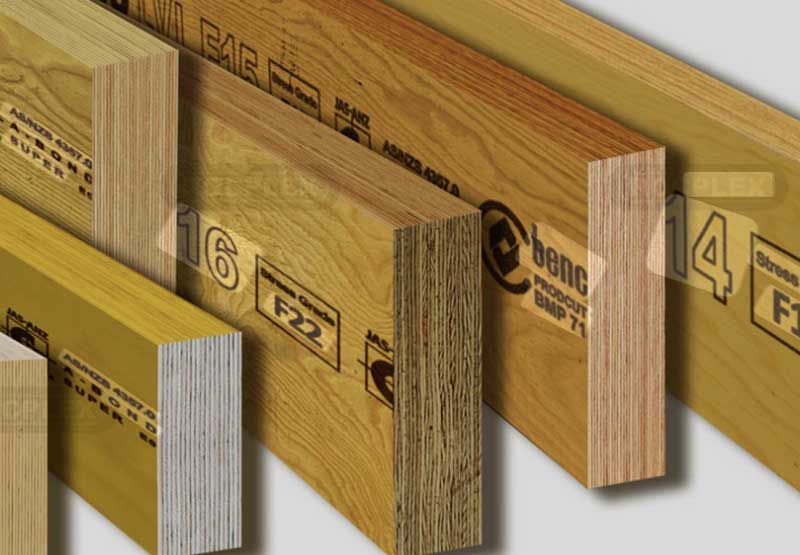
 Get a free quote